EMDR Therapy
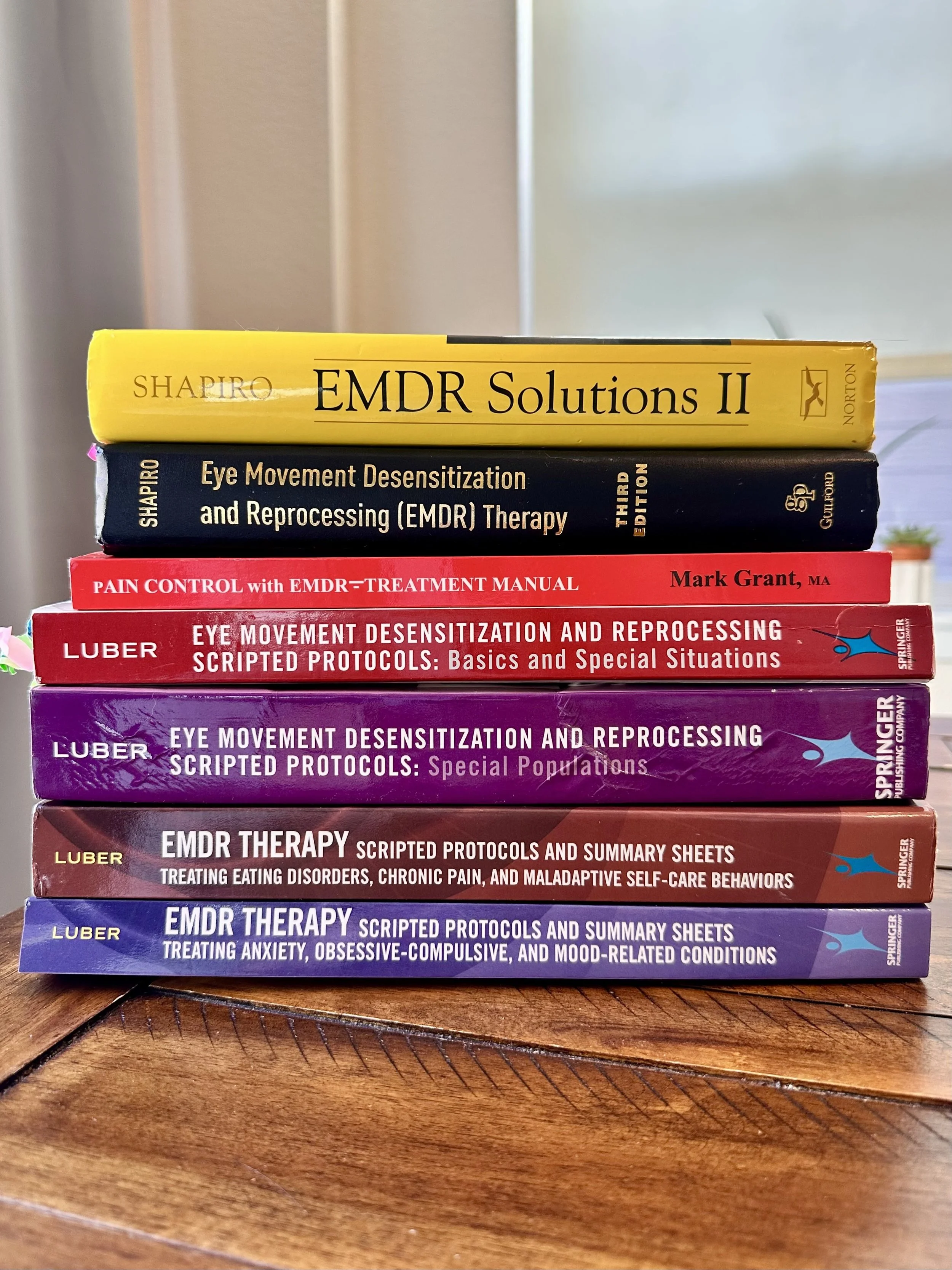
Eye Movement Desensitization Reprocessing
Are you feeling like you can’t let go of something from the past? Do you get “triggered” in certain circumstances with an emotional response that doesn’t feel like it matches the moment?
When we experience a shock to the nervous system - like a car wreck, painful words, or an unwanted surprise - our brain and our body respond in whatever capacity is necessary to keep us physically and emotionally “safe”. Sometimes if that shock (no matter how “traumatic”) does not get sorted into the right part of the brain, it can remain easily activated, leave us feeling both very uncomfortable and often helpless to when the thoughts and emotions will return.
The EMDR process incorporates the parts of the brain that house our thoughts and emotions, and by activating them at the same time, they are realigned so the brain sees the circumstances differently and acknowledges that you are safe in the present moment.
I experienced my own EMDR therapy after a loss that I could not seem to shake, and it completely changed my life - which is why pursued training in EMDR to add to my practice.
I am EMDR Certified by EMDRIA, which means I have extra hours of consultation and training to provide EMDR for a variety of circumstances to a variety of clients. I added more links at the bottom of this page to explain the details of the EMDR process. Below are a couple of ways I like to use EMDR that are less commonly discussed, but are highly effective!
EMDR for Pain
Pain signals start in the brain and are sent to the area of the body that needs attention. Sometimes, if not processed correctly, the brain maintains these signals long after the injury, illness, or incident is over, and your pain remains. The EMDR pain protocol specifically targets the sensation of the pain and the thoughts associated with the pain to give the brain permission to stop firing the pain signals. I have seen amazing results from EMDR when treating pain and determining why the body has yet to let go - and I would be honored to help you heal.
It is important to note that EMDR cannot heal pain that is medical, ie. from a broken bone. However, if pain remains after the bone has fully healed, the body may be holding onto trauma of the injury, and EMDR may be able to help.
More About the EMDR Process
Here are a few of my favorite links to help explain EMDR in more detail.
EMDR Therapy for the Layperson - EMDR Institute
Experiencing EMDR Therapy - EMDRIA Website
What is EMDR? - American Psychological Association
Examples of EMDR for Performance - From Psychology Today
EMDR for Performance
I have additional specialty training to be able to offer EMDR for performance. EMDR can improve your control over your nervous system and prepare your body for how it wants to respond to stress long before the competition or challenging situation occurs.
EMDR can help get rid of the “yips” and mental blocks, quickly get yourself into flow state and increase focus/presence, or change negative self-talk to a more neutral or empowering mindset - depending what works best for you.
I have also used EMDR to heal low confidence from abusive coaching, injury complications, or other sport-related traumatic incidents.